Iranian Gold Coins Explained: Emami, Bahar Azadi, Half, Quarter and Gram Coins
A guide to Iranian gold coins: weights and fineness of the Emami, Bahar Azadi, half, quarter and gram coins, how prices form and how to compute intrinsic value.
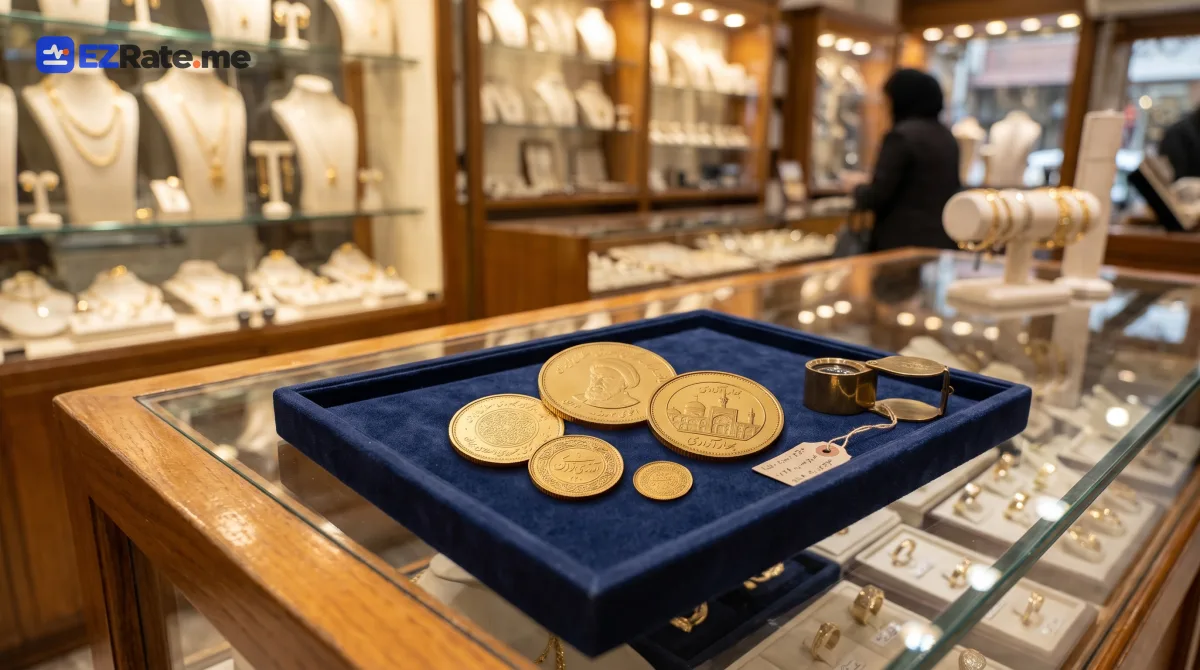
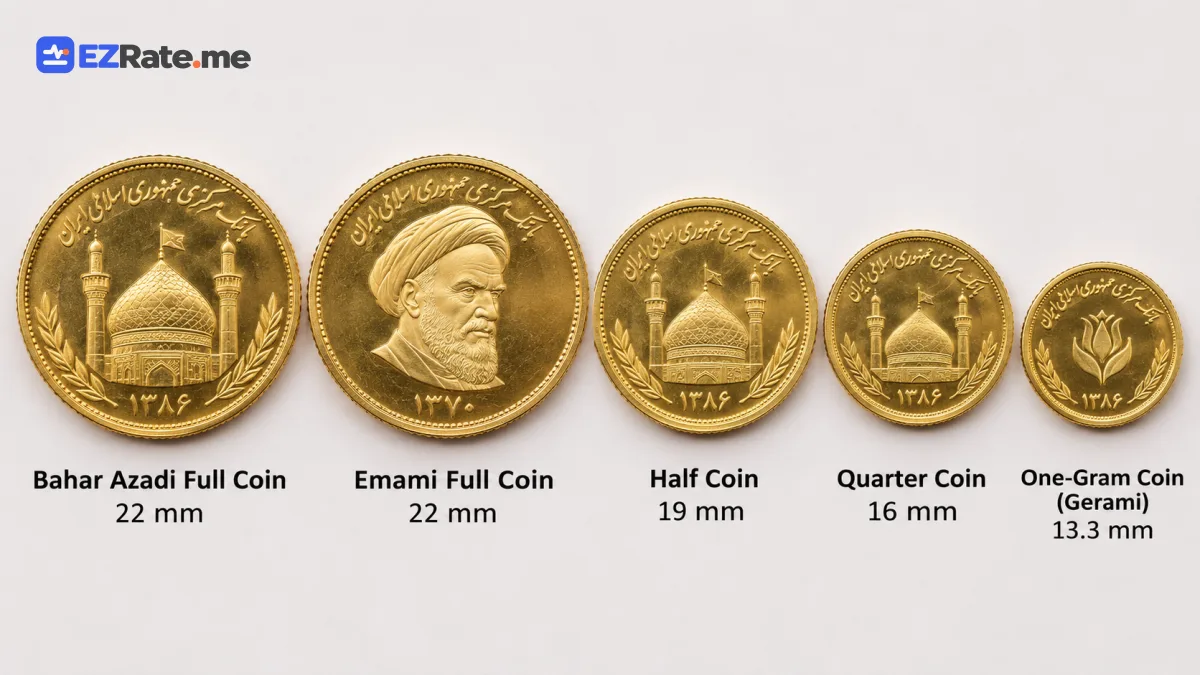
- The Central Bank of Iran mints full coins (8.133 g), half (4.0665 g), quarter (2.033 g) and gram coins (~1.01 g), all at 900 fineness.
- Coin prices combine gold value and a premium (“bubble”) that varies by coin and over time; smaller coins usually carry larger premiums.
- Intrinsic value = weight × 0.9 × price of pure gold; the bubble is the market price over that value.
Gold coins are Iran’s most popular savings instrument and gift. Foreign readers — and many developers building products for Iranian users — often find the coin market confusing: two designs of the same coin, several fractions and prices that do not match their gold content. This guide explains Iranian gold coins clearly.
For the developer side see the Iran gold price API. For the full data picture see the Iranian Rial exchange rate API guide. Our existing guides on coin bubble calculation and the gold bubble go deeper on premiums.
The coins
| Coin | Weight | Pure gold | API symbol |
|---|---|---|---|
| Emami (full, new design) | 8.133 g | ≈ 7.32 g | emami |
| Bahar Azadi (full, old design) | 8.133 g | ≈ 7.32 g | bahar |
| Half coin (nim) | 4.0665 g | ≈ 3.66 g | nim |
| Quarter coin (rob) | 2.033 g | ≈ 1.83 g | rob |
| Gram coin (gerami) | ≈ 1.01 g | ≈ 0.91 g | gerami |
Fineness 900 means 90% gold — about 21.6 karat. Iranian jewellery, by contrast, is 18 karat (750).
Emami vs Bahar Azadi
Both full coins contain the same gold. The Emami is still minted, more liquid and used as the reference for exchange-traded coin certificates, so it usually trades at a higher premium. Bahar Azadi coins are older and slightly cheaper, but can be a little harder to sell quickly.
Where coin prices come from
- Gold value: the global ounce converted with the free-market dollar.
- Premium (bubble): local supply and demand for coins specifically — strong in uncertain times, smaller when the market is calm.
- Coin-specific factors: liquidity, design, condition, and whether the coin is still in its sealed bank pack.
Because the dollar is part of the gold value, coin prices react to both global gold and the Tehran dollar. See XAU/USD and Tehran gold correlation.
Calculating intrinsic value and the bubble
OUNCE_G = 31.1035
COINS = {"emami": 8.133, "bahar": 8.133, "nim": 4.0665, "rob": 2.033, "gerami": 1.01}

def intrinsic(symbol, ounce_usd, usd_irt):
    pure = COINS[symbol] * 0.900
    return pure * ounce_usd / OUNCE_G * usd_irt

def bubble(symbol, coin_irt, ounce_usd, usd_irt):
    return coin_irt / intrinsic(symbol, ounce_usd, usd_irt) - 1
Some analysts use the Tehran 18k gram price instead of the ounce (replace ounce_usd / OUNCE_G * usd_irt with g18 / 0.75). The ounce-based number measures the premium over world gold; the 18k-based number measures the premium over local gold. State which one you use.
Why small coins carry bigger premiums
- Minting cost is a larger share of a small coin’s value.
- Gift demand concentrates on quarter and gram coins.
- Affordability: more buyers can afford them, so demand is broader.
Sealed vs loose coins
Coins in the central bank’s sealed vacuum pack (“bank coins”) trade at a small premium over loose coins, because buyers trust their authenticity and weight. Opening the pack typically lowers the resale price.
Coins vs other ways to hold gold
| Option | Pros | Cons |
|---|---|---|
| Coins | Standard, liquid, no making charge | Premium can shrink |
| 18k jewellery | Usable | Making charge and VAT are lost on resale |
| Gold funds / coin certificates | No storage, small amounts | Trading hours, fund premium |
| Gold tokens (PAXG) | Tracks world gold | Issuer and access risks for Iranians |
Related live rates: gold coin prices, Emami coin price, US dollar rate.

Comments (0)
Comments are shown after review. Sign-in is needed to send.