Is a Crypto Wallet Traceable? How Wallet Tracking and Owner Lookup Really Work
Is a crypto wallet traceable? What anyone can see from an address, how to find the owner of a crypto wallet, and the steps to trace stolen crypto.
- Every Bitcoin, USDT, TRON and Ethereum transaction is public, so any wallet can be traced — but the owner’s name is not on the blockchain.
- An address reveals its balance, history, counterparties and often the exchange behind it; the real identity is held only by the exchange that verified the user.
- For stolen crypto: check the destination address, find the receiving exchange, and report the transaction hash to the police and to that exchange.
Someone sent you a wallet address and you want to know who is behind it. Your USDT disappeared in a P2P deal. Or you simply wonder who can see your own wallet. All of these come down to one question: is a crypto wallet traceable, and where does real tracing end and wishful thinking begin?
Why crypto wallets are traceable
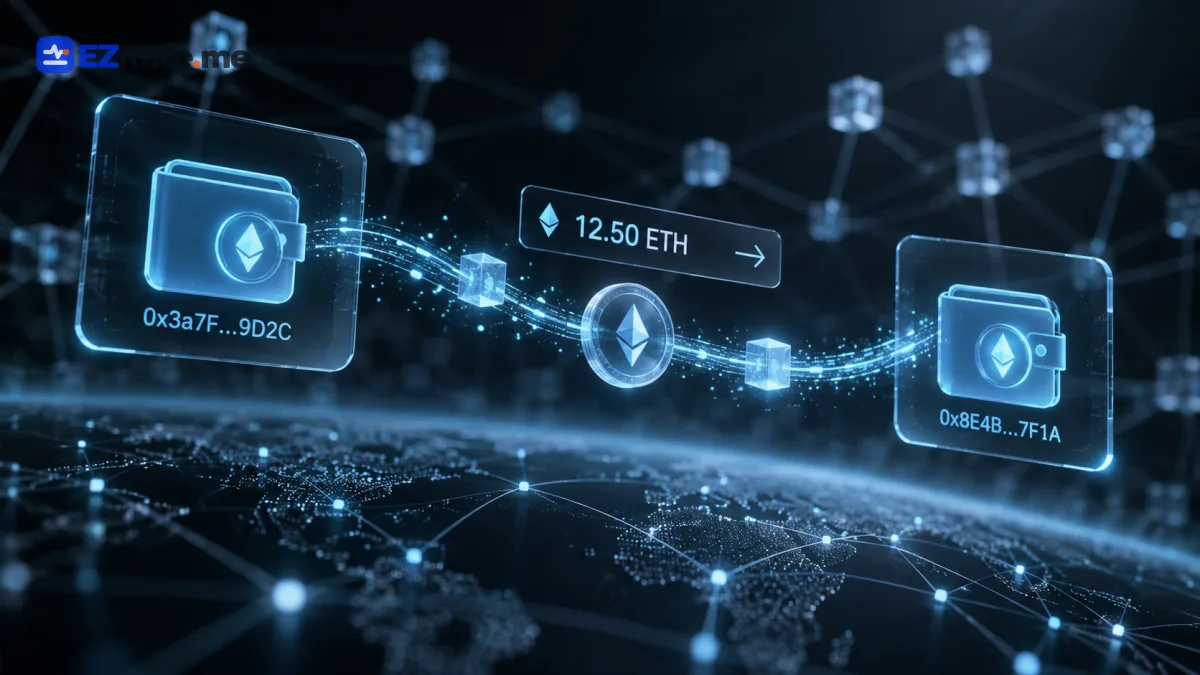
A blockchain is a public ledger. When USDT TRC20 moves between two addresses, the amount, time, sender, receiver and fee are written to the TRON network and nobody — not even the wallet owner — can erase them. Bitcoin, Ethereum, BSC and most other networks work the same way. That is why a crypto wallet tracker only needs the address.
An address, however, is a random string (TRON addresses start with T) with no name, phone number or ID in it. This is called pseudonymity: everything is visible except who controls the address.
What an address reveals
| Information | Visible? | Notes |
|---|---|---|
| Balance | Yes | USDT, TRX, BTC, ETH and other tokens — you can check the balance of any address |
| Transaction history | Yes | Every deposit and withdrawal with amount, time and hash |
| Counterparties | Yes | The addresses that paid into or received from the wallet |
| Creation date | Yes | The first transaction; a brand-new wallet is a caution sign |
| Exchange behind it | Often | Exchange wallets carry labels and user deposit addresses sweep into them |
| Frozen or sanctioned | Yes | Tether and Circle freeze lists and the OFAC sanctions list |
| Owner’s identity | No | Held only by the exchange that ran KYC, released to police or courts |
A crypto wallet address lookup therefore follows the money from one address to the next until it reaches a known point — usually an exchange.
How to find the owner of a crypto wallet
To find the owner of a crypto wallet there are two different levels, and it matters not to mix them up.
Level 1: what kind of owner
Whether the address belongs to an exchange, is a user’s deposit address at an exchange, a service, a smart contract or a personal wallet. Anyone can work this out from public data, and the wallet check report shows exactly that: the exchange name (for example Binance), whether it is a deposit address or the exchange’s own hot wallet, and a warning for sanctioned or high-risk exchanges.
Level 2: the real identity
If the funds reached a deposit address at an exchange, that exchange knows its customer from the KYC documents — and discloses them only to police or a court. The lawful path to an owner therefore always starts with finding the receiving exchange and continues with an official report.
Choosing a crypto wallet tracker
Block explorers (Tronscan, Etherscan, mempool.space) show raw data, but you need a different one for every network and you have to put labels and sanctions lists together yourself. A wallet tracker does it in one place. In the EZRate wallet check the network is detected from the address, and you get:
- Free, no sign-up: balance and assets, number of transactions, USDT and USDC freeze state and sanctions or blacklist hits.
- Full report (3 a month free with an account): owner type and exchange name, the last 10 counterparties with their labels and risk, a 0–100 risk score and the sources used.
- Networks: Tron, Ethereum, BSC, Bitcoin, Polygon, Arbitrum, Base, Optimism, Litecoin, Dogecoin, Solana and TON.
How to trace stolen crypto, step by step
If your crypto was stolen, lost in a P2P scam or your wallet was hacked, start to trace stolen crypto today — every day of delay gives the thief more time to move it.
- Keep the evidence: transaction hash (TxID), destination address, time, amount and screenshots of your chats. Delete nothing.
- Check the destination address: run it through the wallet check and see in the full report where the funds went next and whether they reached an exchange. The exchange name and the transaction that reached it are the key leads.
- Report it: file a police report with the evidence and the receiving exchange, and contact that exchange’s support with the transaction hash. Exchanges freeze accounts and share data at the request of law enforcement.
- USDT can be frozen: Tether freezes addresses linked to theft and fraud at the request of authorities, after which the USDT cannot move. You can check an address’s freeze state for free at any time.
- Warn others: share the scammer’s address in the groups where you trade.
Is my own wallet traceable?
Yes — just as you can see other people’s balances, anyone with your address can see yours. So:
- Use a separate wallet to receive money from strangers and do not keep everything on one address.
- Never share your private key or recovery phrase; the address is public, the key is not.
- Check an address before you accept funds from it: USDT coming from a hacked or sanctioned address can get your own exchange account limited. More in our crypto wallet risk check.
Check the price before the deal, too
Most P2P scams start with a price that is too good: USDT below the market or someone buying Bitcoin above it. Before any deal, besides checking the address, look up the live rate on the USDT price, TRON price and Bitcoin price pages; a big gap from the market is a reason to be more careful.
The limits of wallet tracing
Tracing does not always reach the end. Mixers (such as Tornado Cash) and cross-chain bridges break the trail, personal wallets that never touch an exchange have no known owner, and privacy coins such as Monero have no public transactions at all. That is why every EZRate report says it plainly: a low risk score means no risk signs were found in the sources checked, not that a wallet is 100 % clean.

Comments (0)
Comments are shown after review. Sign-in is needed to send.